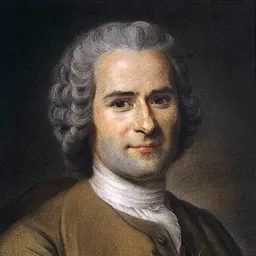
Jean-Jacques Rousseau
Genevan philosopher, author of The Social Contract · 1712–1778
Jean-Jacques Rousseau was a Genevan-born philosopher and writer whose The Social Contract placed sovereignty in the general will of the people. He criticised inequality and the corrupting effects of commercial society and argued for small, patriotic republics of engaged citizens.
How close are you? Take the test →Position on the 12 axes
Estimated from their documented words and actions. A simplification, not a verdict.
Preferred small republics and suggested federations of small states, as in his proposals for Poland.
Located sovereignty in the people as a whole and wanted citizens to make laws directly, not through representatives.
Held that those who refuse the general will may be 'forced to be free' and proposed banishing those rejecting civil religion.
Urged patriotic education and national pride, especially in his Considerations on the Government of Poland.
Favoured citizen militias over standing armies and was wary of conquest.
Advised Poland to protect its national customs and dress against foreign cultural influence.
Traced social evils to private property and inequality in his Discourse on Inequality.
Proposed sumptuary laws and state measures to keep fortunes modest.
His plan for Corsica centred on agricultural self-sufficiency and limited foreign trade.
Proposed a mandatory civil religion with basic dogmas enforced by the state.
Radically egalitarian in politics, but critical of modern 'progress' and traditional in his views of women's roles.
His Discourse on the Arts and Sciences argued that advances in learning and technique corrupt morals.