12axes Political Test: Where do you really stand?
Rate a set of statements. Get your political shape across 12 axes and find the ideologies closest to you.
Rate a set of statements. Get your political shape across 12 axes and find the ideologies closest to you.
12axes is a free political test that measures your views on twelve separate axes instead of the usual one or two. You rate statements from strongly agree to strongly disagree, and the test places you between two poles on each axis: federal or unitary, democratic or autocratic, planned or laissez-faire, and nine more.
It comes from a family of online political quizzes that began with 8values and its four axes, grew into 9axes, and then into the original 12axes test. 12axes.pro keeps the original twelve axes, rewrites many of the statements for readers anywhere in the world, and adds what the original never had: a match against 83 ideologies and 124 historical figures, a political shape you can share, and a plain-English sentence that sums up where you stand.
Choose a length. Every version draws the same number of statements toward each pole of every axis, at four levels of intensity, so agreeing with everything lands you near the centre.
Agreeing with an extreme statement counts for more than agreeing with a mild one, and rejecting a mild statement says more than rejecting an extreme one. Each axis gets a percentage between its two poles.
Your twelve scores form a shape. We compare it with every ideology and historical figure in the catalogue and show the closest, the farthest, and how close you are on each area of politics.




The axes fall into four areas of politics. Each one runs between two poles, and you can sit anywhere along it, so an economic left-winger can still be a social traditionalist, or a free-marketeer a pacifist.
“I want leaders who answer to voters, peace and diplomacy over force and religion kept out of law and public life.”
A two-axis chart puts a free-market pacifist and a free-market hawk in the same spot. More axes keep them apart. Here is how the best-known political tests compare.
| Test | Axes | What it measures | What you get |
|---|---|---|---|
| Political Compass | 2 | Economic left–right, authoritarian–libertarian | A point on a two-dimensional grid |
| 8values | 4 | Economy, diplomacy, state, society | Four percentages and a closest ideology |
| Original 12axes | 12 | Government, foreign affairs, economy, society | Twelve percentages |
| 12axes.pro | 12 | The same twelve axes, with rewritten statements and intensity-weighted scoring | Your political shape, 83 ideologies and 124 historical figures ranked, a summary sentence, a share image |
Each axis has 24 statements, half toward each pole, spread over four levels of intensity. Every test length keeps that balance, so the result reflects what you believe, not how agreeable you are.
The scoring is explained in full, and every ideology and figure shows its position on all twelve axes with a written reason for each. You can check any match yourself.
Statements were reviewed to remove loaded language and to describe each view the way its own supporters would. No side is described more kindly than another.
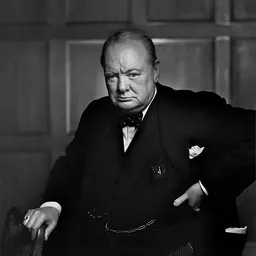
Historical figures are placed from what they wrote, said and did. We only include people who have died, and every portrait is public domain or freely licensed.
Abraham LincolnWinston ChurchillKarl MarxAdam SmithMahatma Gandhi Martin Luther King Jr.
 Margaret Thatcher
 George Orwell
 Friedrich Hayek
 Nelson Mandela
 John Locke
 Simone de Beauvoir
 Franklin D. Roosevelt
 Hannah Arendt
 Milton Friedman
 Emma Goldman
12axes is a free online political test that scores your views on twelve separate axes, from federal versus unitary government to accelerationism versus bioconservatism. It then compares your profile with 83 ideologies and 124 historical figures.
The Quick test has 48 statements and takes about 5 minutes. Standard has 96 statements (about 12 minutes) and Full has 192 (about 25 minutes). Longer tests give a steadier result.
It is a structured way to explore your political views, not a scientific instrument. Every test length is balanced between the two poles of each axis and across levels of intensity, and the scoring weighs how extreme each statement is. Results on the Standard and Full tests vary less between attempts than on the Quick test.
8values places you on four axes: economy, diplomacy, state and society. 12axes splits those areas into twelve narrower axes, such as separating trade policy from economic planning, or immigration from foreign policy, so combinations that 8values would average out stay visible.
It answers the same question in more detail. The Political Compass uses two axes, economic and social. 12axes uses twelve, grouped into government, foreign affairs, economy and society, and adds matches with named ideologies and historical figures.
It is 100 minus the typical gap between your position and an ideology or figure across the 12 axes. A 90% match means you are, on average, about ten points apart on each axis. It measures closeness of views, not membership of a movement.
The test is free and needs no sign-up. Your answers are scored in your browser and never pass through our servers; a result link stores only your twelve scores.
The twelve axes and the original statements come from the open-source 12axes test (MIT License). We have rewritten many statements to fix errors, remove loaded wording and make them clear to readers outside the United States.
48 statements, about 5 minutes, no sign-up.