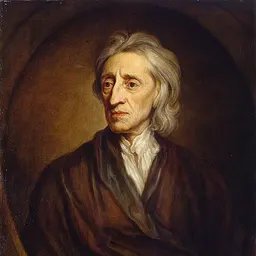
John Locke
English philosopher, author of Two Treatises of Government · 1632–1704
John Locke was an English philosopher and physician whose Two Treatises of Government argued that governments exist to protect life, liberty and property and rest on the consent of the governed. He also wrote in favour of religious toleration and is regarded as a founder of liberalism.
How close are you? Take the test →Position on the 12 axes
Estimated from their documented words and actions. A simplification, not a verdict.
Distinguished legislative, executive and federative powers but said little about regional self-government.
Grounded legitimate rule in consent and defended a right to resist tyrannical government; franchise limited to property owners in practice.
Argued government is limited to protecting natural rights and may not invade them.
No strong recorded view on international bodies; treated states as in a state of nature with each other.
No strong recorded view beyond justifying defensive war and resistance to aggressors.
No strong recorded view; supported naturalising foreign Protestants to increase England's population.
Argued people gain property by mixing their labour with nature, and that protecting it is a core purpose of government.
Favoured limited government, though he served on the Board of Trade and drafted poor-law proposals.
Held broadly mercantilist views on the balance of trade as a member of the Board of Trade.
Argued for separating church and civil government and tolerating dissenters, while excluding atheists and Catholics.
By the standards of his time, his consent-based, rights-centred politics challenged divine-right monarchy.
An empiricist close to the Royal Society who supported the new experimental science.