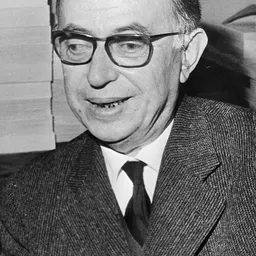
Jean-Paul Sartre
Existentialist philosopher and writer · 1905–1980
Sartre was a French philosopher, playwright and novelist and the leading figure of existentialism, who argued that people are radically free and responsible for their choices. Politically he was a Marxist fellow traveller in the 1950s, later backed far-left groups and anti-colonial movements.
How close are you? Take the test →Position on the 12 axes
Estimated from their documented words and actions. A simplification, not a verdict.
No strong recorded view on regional versus central government.
He defended the Soviet Union in the early 1950s and later backed far-left groups, though he broke with Moscow after Hungary.
He opposed censorship and torture in Algeria, while excusing repression in some revolutionary states.
He supported anti-colonial and revolutionary movements around the world.
His preface to Fanon's The Wretched of the Earth defended anti-colonial violence.
He opposed French colonialism in Algeria and rejected assimilation of colonised peoples.
He described Marxism as the philosophy of his time and supported socialist revolution.
He supported socialist economics and state-led transformation.
No strong recorded view on trade.
He was an atheist whose existentialism started from the absence of God.
He rejected bourgeois morality and supported radical social change.
No strong recorded view on technology.