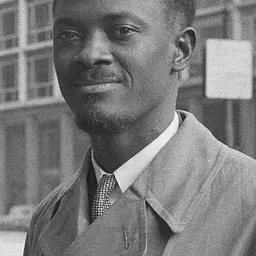
Patrice Lumumba
1st Prime Minister of the Democratic Republic of the Congo · 1925–1961
Patrice Lumumba led the Congolese National Movement to victory in the 1960 elections and became the country's first prime minister at independence from Belgium. He argued for a unified Congo free of Belgian economic and political control, was removed from office within months and was killed in January 1961.
How close are you? Take the test →Position on the 12 axes
Estimated from their documented words and actions. A simplification, not a verdict.
Insisted on a unitary Congo, opposing the federalists of ABAKO and fighting the secessions of Katanga and South Kasai.
Came to power through the 1960 parliamentary elections, leading the only party with support across many regions.
His short time in office was spent facing mutiny and secession, so his record on civil liberties is limited.
A Pan-Africanist who appealed to the United Nations for help and aligned with other newly independent African states.
Sent the national army against the South Kasai secession and sought outside military help to end the Katanga breakaway.
Called on Congolese to put a shared national identity ahead of ethnic and regional loyalties.
Spoke of ending colonial exploitation and sharing the country's wealth, though he never set out a full socialist programme.
Wanted the state to take a stronger role in an economy dominated by Belgian mining companies; detailed plans were never enacted.
Sought economic independence from Belgian firms and control over Congolese resources.
Educated in mission schools but ran a secular nationalist movement with little religious content.
His independence day speech openly condemned colonial racism and demanded dignity and equal rights for Africans.
No strong recorded view on technology or science policy.