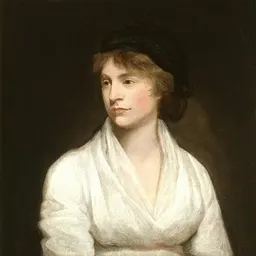
Mary Wollstonecraft
Writer and early advocate of women's rights · 1759–1797
Wollstonecraft was an English writer best known for A Vindication of the Rights of Woman, which argued that women should receive the same rational education as men. She also defended the French Revolution and criticised hereditary privilege.
How close are you? Take the test →Position on the 12 axes
Estimated from their documented words and actions. A simplification, not a verdict.
No strong recorded view on regional versus central government.
In A Vindication of the Rights of Men she attacked hereditary monarchy and aristocracy in favour of republican principles.
She defended individual rights and liberty of conscience against inherited authority.
She lived in revolutionary Paris and wrote of universal rights rather than national loyalty.
She criticised standing armies and military life as corrupting and hierarchical.
No strong recorded view on immigration or cultural integration.
She condemned inherited wealth and the gap between rich and poor as sources of vice.
No strong recorded view on economic planning.
No strong recorded view on trade.
A Rational Dissenter who believed in God, she grounded rights in reason rather than church authority.
By eighteenth-century standards she was radically progressive in demanding equal education and status for women.
She shared the Enlightenment faith in reason and improvement, with no specific view on technology.