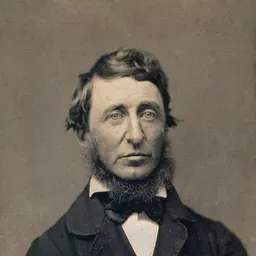
Henry David Thoreau
Essayist and naturalist · 1817–1862
Thoreau was an American Transcendentalist writer known for Walden, his account of simple living, and the essay Civil Disobedience. He refused to pay taxes in protest at slavery and the Mexican–American War.
How close are you? Take the test →Position on the 12 axes
Estimated from their documented words and actions. A simplification, not a verdict.
He placed individual conscience and local life above the authority of national government.
He argued that majority rule did not override individual conscience on moral questions.
He went to jail rather than pay a tax that funded slavery and war.
No strong recorded view on international cooperation; he opposed the expansionist Mexican War.
He opposed the Mexican War but later publicly defended John Brown's armed raid.
No strong recorded view on immigration.
He criticised materialism and the pursuit of wealth, but as personal ethics rather than redistribution.
He endorsed the motto that the best government governs least.
No strong recorded view on trade.
He held a nature-centred spirituality and kept away from organised churches.
By the standards of his time he was progressive, actively aiding fugitive slaves.
In Walden he questioned the value of railroads and modern conveniences.