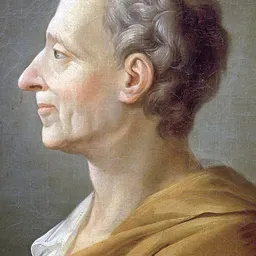
Montesquieu
French political philosopher, author of The Spirit of the Laws · 1689–1755
Montesquieu was a French noble and magistrate whose The Spirit of the Laws compared governments around the world. He argued that liberty depends on separating legislative, executive and judicial powers and on intermediate bodies that check central authority.
How close are you? Take the test →Position on the 12 axes
Estimated from their documented words and actions. A simplification, not a verdict.
Praised confederate republics and defended nobles, courts and towns as intermediate powers checking the centre.
Admired England's constitutional monarchy with an elected chamber, rather than pure democracy or despotism.
Defined political liberty as security under law, protected by the separation of powers.
Argued that commerce makes nations interdependent and inclines them toward peace.
Accepted defensive war but warned that large standing armies ruin states.
Held that laws should fit each people's climate and customs, a relatively tolerant view of cultural difference.
Wrote that republics need rough equality, while defending property and noble privilege in monarchies.
Accepted some state provision for the poor but generally favoured commercial freedom.
Praised commerce for softening manners and curing destructive prejudices.
Criticised the Inquisition and religious persecution while treating religion as socially useful.
By eighteenth-century standards a reformer on torture and slavery, yet a defender of hereditary nobility.
No strong recorded view.