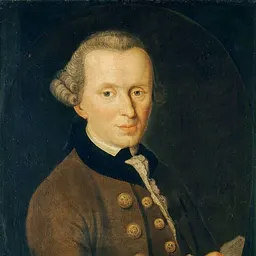
Immanuel Kant
German philosopher of the Enlightenment · 1724–1804
Immanuel Kant was a philosopher from Königsberg whose moral philosophy grounded duties in reason and human dignity. In Perpetual Peace he called for republican constitutions within states and a federation of free states to end war.
How close are you? Take the test →Position on the 12 axes
Estimated from their documented words and actions. A simplification, not a verdict.
Proposed a voluntary federation of free states for peace, though he said little on domestic regional power.
Wanted a 'republican' constitution with separation of powers, while distrusting direct democracy and denying a right of rebellion.
Defended freedom of public reasoning but asked subjects to obey the law in their civic duties.
Perpetual Peace called for a league of nations and a cosmopolitan right of hospitality.
Urged gradual abolition of standing armies and treated war as contrary to reason.
Supported a right of hospitality for strangers, though his anthropology lectures ranked human races.
No strong recorded view; accepted state support for the poor while defending property rights.
No strong recorded view.
Argued the spirit of commerce is incompatible with war and draws nations together.
Grounded morality in reason, criticised clerical authority and reduced religion to moral faith.
By eighteenth-century standards an advocate of enlightenment and reform.
No strong recorded view beyond general support for scientific progress.