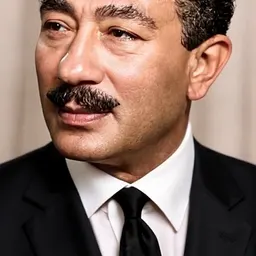
Anwar Sadat
3rd President of Egypt · 1918–1981
Anwar Sadat succeeded Nasser as president of Egypt in 1970, launched the 1973 war against Israel and then signed the Camp David Accords and a 1979 peace treaty with Israel. At home he opened the economy to private and foreign investment and was assassinated in 1981.
How close are you? Take the test →Position on the 12 axes
Estimated from their documented words and actions. A simplification, not a verdict.
Ruled Egypt as a highly centralized presidential state, as his predecessor had.
Allowed limited multiparty politics from 1976 but kept presidential dominance and controlled elections.
In September 1981 he ordered the arrest of more than 1,500 critics, including politicians, clerics and journalists.
Moved Egypt from the Soviet camp toward the United States and put Egyptian interests ahead of pan-Arab policy.
Launched the 1973 October War, then made peace with Israel through diplomacy at Camp David.
No strong recorded view on immigration or cultural integration.
His Infitah (open door) policy encouraged private enterprise and reversed parts of Nasser's socialism.
Reduced state control and invited foreign capital, though the public sector stayed large.
Opened Egypt to foreign investment and imports under Infitah.
Styled himself the 'Believer President' and in 1980 made Islamic law the principal source of legislation.
Backed a 1979 reform of personal status law promoted by his wife Jehan, while drawing on religious conservatives for support.
No strong recorded view on technology or science policy.