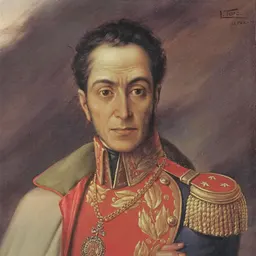
Simón Bolívar
Leader of South American independence · 1783–1830
Bolívar led the wars that freed Venezuela, Colombia, Ecuador, Peru and Bolivia from Spanish rule. He served as president of Gran Colombia and argued for strong centralised republics and a union of the new Spanish American states.
How close are you? Take the test →Position on the 12 axes
Estimated from their documented words and actions. A simplification, not a verdict.
Argued in the Cartagena Manifesto that federalism had weakened the first Venezuelan republic and favoured centralism.
Founded republics but proposed a life presidency and ruled as dictator of Gran Colombia from 1828.
Favoured strong executive authority to keep order in the new states.
Called the Congress of Panama in 1826 to build a confederation of American states.
Spent most of his career leading armies in the wars of independence.
No strong recorded view on immigration.
Promised land to soldiers and freed the people he enslaved, while keeping propertied elites in power.
No strong recorded view on economic management.
Opened trade with Britain and other partners after independence from Spanish monopoly.
His Bolivian constitution allowed private religious freedom, though Catholicism remained central.
Called for the abolition of slavery, radical by early 19th-century Spanish American standards.
No strong recorded view on technology.