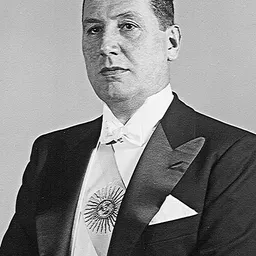
Juan Perón
President of Argentina · 1895–1974
Perón was an army officer elected president of Argentina three times, ruling 1946–1955 and 1973–1974. His movement, Peronism, combined nationalism, labour rights and state-led industrialisation with authoritarian methods.
How close are you? Take the test →Position on the 12 axes
Estimated from their documented words and actions. A simplification, not a verdict.
He centralised power in the national executive and intervened in provincial governments.
He won free elections but restricted the press, jailed opponents and packed the Supreme Court.
His government censored newspapers and persecuted political opponents.
He promoted a "Third Position" between capitalism and communism, putting national sovereignty first.
He was a career officer, but he did not lead Argentina into foreign wars.
No strong recorded view on immigration.
He expanded labour rights, wages and welfare, and nationalised railways and utilities.
He introduced Five-Year Plans and nationalised key industries.
He used a state trade agency (IAPI) and high tariffs to protect domestic industry.
He at first favoured Catholic education, then clashed with the Church in 1954–55 and legalised divorce.
His government granted women the vote in 1947, though it also enforced conformity to the movement.
He promoted industrialisation and funded the Huemul nuclear fusion project.