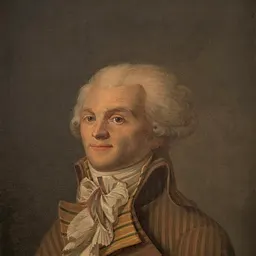
Maximilien Robespierre
Leader of the Jacobins in the French Revolution · 1758–1794
Robespierre was a lawyer and Jacobin leader who dominated the Committee of Public Safety during the Reign of Terror in 1793 and 1794. He argued for popular sovereignty and virtue in government and was executed after the Thermidorian Reaction.
How close are you? Take the test →Position on the 12 axes
Estimated from their documented words and actions. A simplification, not a verdict.
Led Jacobin centralism against the Girondins' federalism and insisted on a single and indivisible republic.
Early on he argued for universal male suffrage, but in power he suspended elections and ruled through the Terror.
Defended terror as the instrument of virtue; the Law of 22 Prairial removed defendants' protections.
Opposed exporting revolution by war in 1792 but later defended the republic in nationalist terms.
Argued against Brissot's war of 1792, then backed total mobilisation once war began.
Supported citizenship for Jews and the abolition of colonial slavery; no strong recorded view on immigration.
Argued property should be limited by social duty and backed measures for the poor.
His government imposed the General Maximum, fixing prices and wages.
No strong recorded view on trade beyond wartime requisition and controls.
Opposed forced dechristianisation and founded a state Cult of the Supreme Being.
Radical by 18th-century standards: he opposed slavery, early on the death penalty, and property limits on voting.
No strong recorded view on technology.