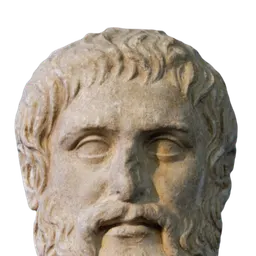
Plato
Athenian philosopher, author of the Republic and the Laws · c. 428–348 BC
Plato was an Athenian philosopher and student of Socrates who founded the Academy. In the Republic and the Laws he argued that a city should be ruled by trained, wise guardians rather than by popular vote, with tight control over property, education and culture.
How close are you? Take the test →Position on the 12 axes
Estimated from their documented words and actions. A simplification, not a verdict.
Implied view: thought in terms of a small, self-contained polis, but wanted it run by a single unified ruling class.
Treated democracy as a decayed form of government and proposed rule by philosopher-kings chosen for wisdom, not by voters.
The Republic censors poets and myths and regulates education and family life to keep civic order.
Implied view: concerned with the self-sufficient city; drew a sharp line between Greeks and foreign 'barbarians'.
Built a permanent guardian-soldier class into his ideal city, though he urged restraint in wars between Greek cities.
The Laws limits how long foreigners may reside in the city and keeps them out of citizenship.
Guardians in the Republic own no private property; the Laws caps the gap between richest and poorest citizens.
The Laws has officials regulate land holdings, prices, trade and occupations in detail.
The Laws prefers a city away from the sea and restricts foreign trade to limit commercial influence.
The Laws imposes a state religion and prescribes punishment, even death, for persistent impiety.
Proposed that women could serve as guardians, radical for his time, yet strongly opposed innovation in arts and customs.
No direct equivalent; his preference for a stable, unchanging city implies mild caution toward innovation.